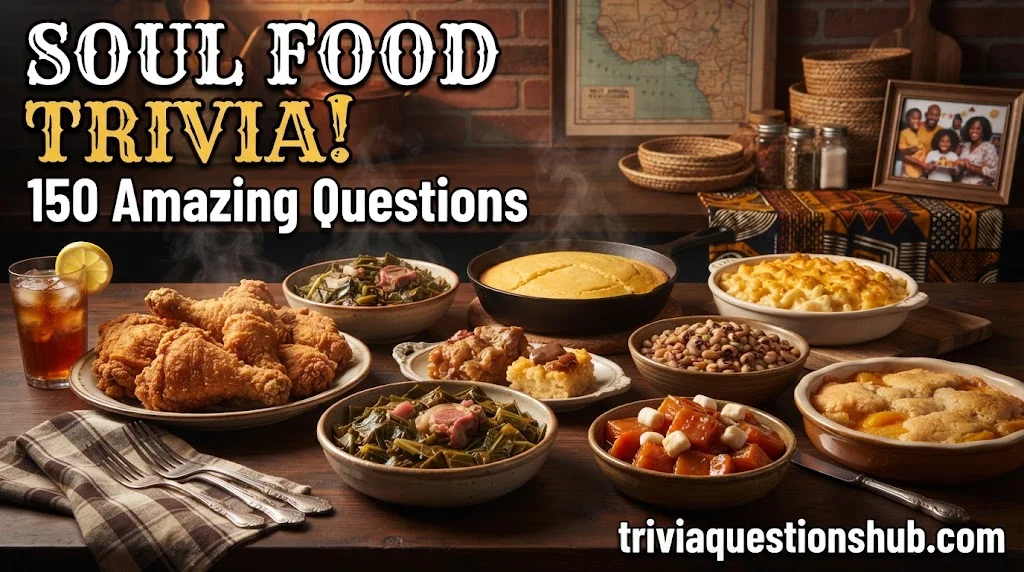
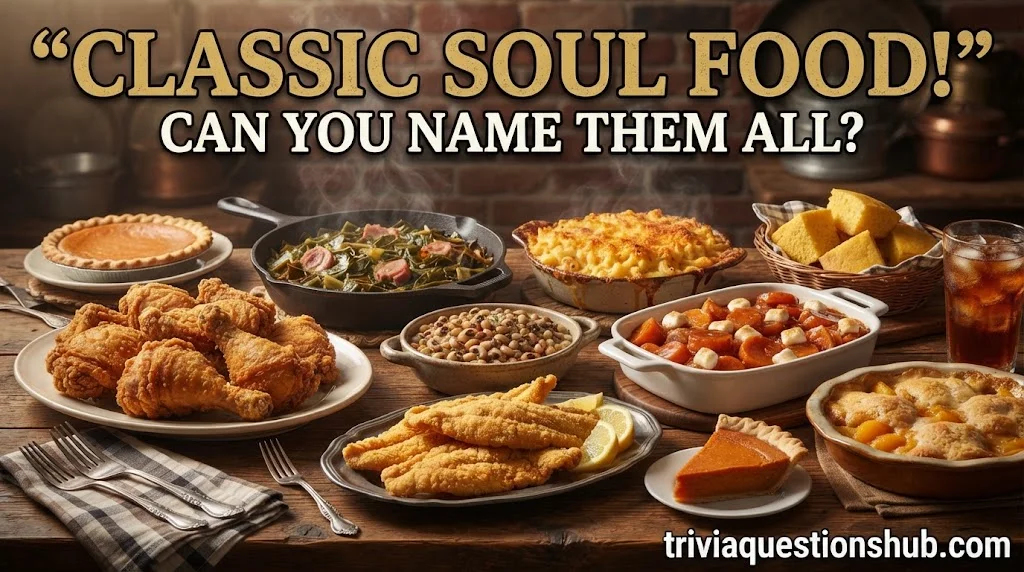
Soul food carries centuries of history in every bite. From West African fields to slave-ship rations to Sunday dinner tables across America, this cuisine tells a story of survival, creativity, and cultural pride.
This soul food trivia collection tests what you really know about the origins of soul food, its classic dishes, and the people who shaped African American cuisine. Grab a plate and see how many you can answer.Soul Food History & Origins Trivia.
Table of Contents
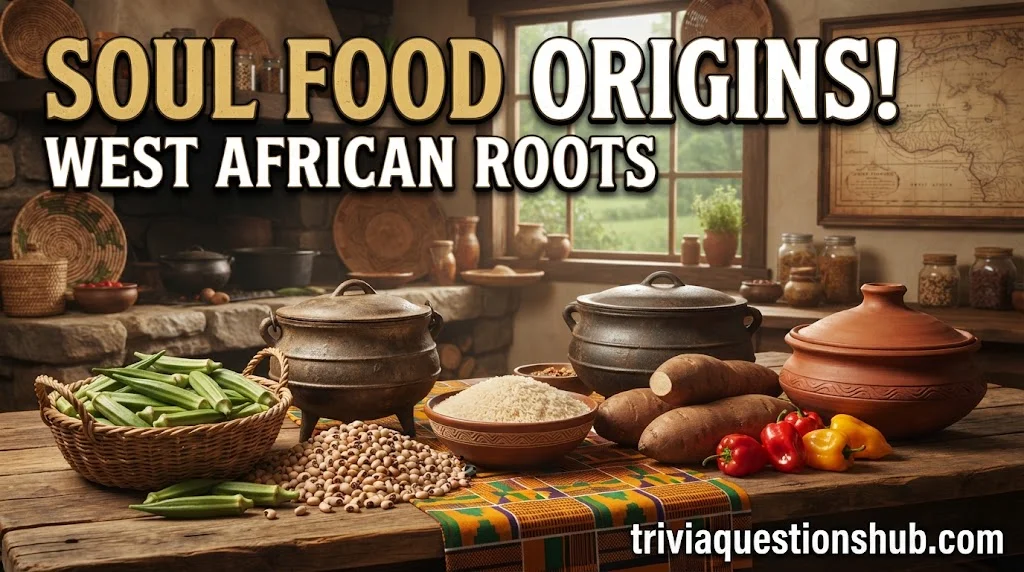
Soul Food Origins Trivia: West African Roots
The origins of soul food trace back centuries before the term existed, rooted in the farming and cooking traditions of West and Central Africa.Soul Food History & Origins Trivia.
Which continent is soul food’s cooking tradition rooted in? West and Central Africa, especially the coastal region once called the Rice Coast.
Where does okra originally come from? Most food historians trace okra back to Ethiopia and the surrounding Horn of Africa region.
What African region supplied African rice to the Americas? The area covering modern Senegal, Gambia, Sierra Leone, and Guinea, historically called the Rice Coast.
Are black-eyed peas native to Africa? Yes, black-eyed peas (cowpeas) were a West African staple long before they reached American soil.
What vegetable did enslaved cooks substitute for African yams? Sweet potatoes, since true yams weren’t widely available in the American South.
What grain forms the base of cornbread’s African-style parallel? Sorghum and millet were used in West African grain breads that inspired cornbread-style cooking.
What was the traditional West African diet mostly made of? It was largely plant-based, built around millet, rice, okra, yams, and hot peppers.
Where does the word “gumbo” come from? It comes from ki ngombo, a Bantu word for okra.
What Nigerian dish is jambalaya often compared to?Jollof rice, a one-pot rice dish with deep West African roots.
What West African dish resembles Hoppin’ John? Ghana’s waakye and Senegal’s thiebou niebe share the same rice-and-bean foundation.
What cooking method connects African and soul food greens dishes? Slow-simmering leafy greens in a seasoned pot liquid, a technique found across West Africa.
What Ethiopian dish resembles collard greens cooking?Gomen wat, a spiced, slow-cooked collard greens dish.
What is “potlikker”? The seasoned broth left over after boiling greens, traditionally soaked up with cornbread.
What term describes the survival of African identity through cooking? Culinary historian Jessica B. Harris calls this retention “culinary memory.”
How were African food crops brought across the Atlantic? Enslaved traders intentionally carried African crops onto slave ships to keep captives alive during the Middle Passage.
Why was rice cultivation knowledge valuable to enslavers? Enslaved West Africans already had advanced rice-farming skills, which were exploited on Southern plantations.
What common Southern flavor pairing has African roots? Hot peppers combined with vinegar, a seasoning base still used in Southern barbecue sauces today.
What cooking style ties African and soul food traditions together? One-pot cooking, where meat, vegetables, and grains simmer together for hours.
What was okra historically used for besides food? It served as a soup thickener, a coffee substitute, and even material for rope.
When did okra reach the Americas? It arrived in the 18th century, carried over through the transatlantic slave trade.
What West African nations are most linked to soul food’s roots? Senegal, Ghana, Nigeria, Sierra Leone, and Gambia.
What African cooking principle shaped soul food seasoning? Layering spices and aromatics gradually to build deep flavor over long cook times.
What starchy staple links soul food to African fufu traditions? Dipping a starch, like cornbread, into a savory gravy or pot liquor.
Did enslaved Africans eat much meat in their original diets? No, traditional West African diets were largely vegetarian; meat was reserved for special occasions.
What was rationed to enslaved Africans on slave ships? Limited portions of African crops like rice, yams, and okra to keep captives alive during transport.
What plantation practice preserved African farming knowledge? Enslaved people grew African crops in garden plots for personal food, keeping traditions alive.
What is the significance of black-eyed peas beyond food? They represent one of the clearest direct links between West African and Southern American diets.
How did enslaved cooks adapt when African ingredients weren’t available? They substituted local ingredients while preserving traditional African cooking techniques.
What connects Southern rice dishes to Africa’s rice-growing region? Enslaved rice farmers from the Rice Coast brought the exact cultivation methods still echoed in Lowcountry rice cooking.
Why is soul food called an early example of culinary fusion? It blends African, European, and Native American ingredients and techniques into one cuisine.
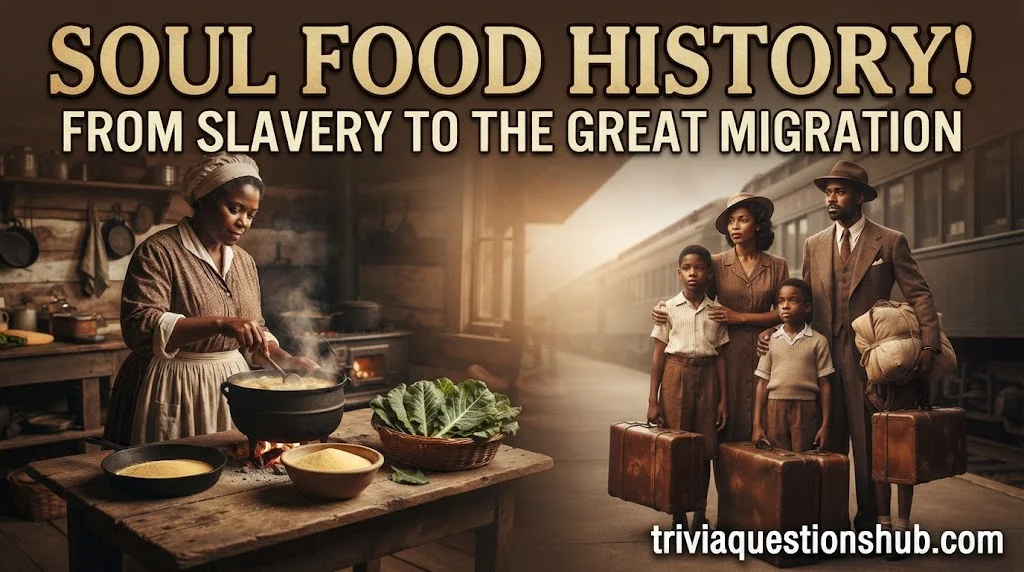
Soul Food History Trivia: From Slavery to the Great Migration
Soul food history stretches from plantation-era survival cooking to the kitchens African Americans built after moving north.
What food rations were enslaved people typically given? Cornmeal, molasses, salt pork, and the least desirable cuts of meat, like offal and fatback.
What is a “fifth quarter” cut of meat? Leftover parts like the head, feet, and organs that enslavers didn’t want, given to enslaved workers instead.
How did enslaved cooks make tough, low-quality meat taste good? They slow-cooked it for hours and seasoned it heavily with African-style spice blends.
What garden practice let enslaved people supplement rations? Small plots where they grew greens, beans, and vegetables for their own families.
What simple bread was baked directly in ashes or on a griddle? Ashcakes and hoecakes, early cornmeal breads made with minimal ingredients.
What historical event ended slavery and shifted soul food’s path? The Emancipation Proclamation in 1863, which began soul food’s transition from survival food to tradition.
What migration moved soul food into Northern and Western cities? The Great Migration, roughly 1910 to 1970.
About how many African Americans took part in the Great Migration? Around six million people relocated from the rural South to urban areas.
Which cities became major soul food hubs during the Great Migration? New York, Chicago, Detroit, and Los Angeles.
What role did Sunday dinners play in Black communities? They became a weekly gathering point where soul food traditions were passed down and celebrated.
What role did churches play in preserving soul food traditions? Church dinners and potlucks kept recipes alive across generations and communities.
How were soul food recipes traditionally passed down? Mostly through oral tradition, muscle memory, and hands-on practice rather than written recipes.
What kitchen tool became central to Southern Black cooking? The cast iron skillet, used for everything from cornbread to fried chicken.
What food preservation methods did enslaved and freed cooks rely on? Salting, smoking, and canning to make food last without refrigeration.
What did soul food symbolize during the Jim Crow era? A source of dignity, community, and cultural continuity amid segregation and hardship.
What free meal program did the Black Panther Party run? A free breakfast program for children, rooted in community care and soul food traditions.
How did soul food change once it reached Northern cities? Home cooks became chefs, caterers, and restaurant owners, bringing the cuisine to a wider public.
What did soul food represent for migrants far from the South? A taste of home and a way to preserve Southern heritage in a new environment.
What smokehouse tradition shaped soul food’s meat dishes? Curing and smoking pork, a preservation technique later refined into today’s barbecue traditions.
What did “not a morsel wasted” mean in soul food cooking? Every part of an ingredient, especially meat, was used to stretch limited food resources.
What role did Black-owned restaurants play after the Great Migration? They introduced soul food to broader American audiences beyond Black communities.
What did soul food represent during the Civil Rights Movement? A form of cultural resistance and a symbol of Black identity and pride.
How did rural soul food differ from urban soul food? Rural cooking stayed closely tied to gardens and small farms, while urban cooking adapted to city markets.
What did “low and slow” cooking accomplish in soul food? It transformed cheap, tough cuts of meat into tender, flavorful dishes.
What Southern staple crop shaped soul food’s grain dishes? Corn, used for cornbread, grits, and hush puppies.
How did soul food connect communities across state lines? Migrating families carried recipes with them, spreading Southern dishes nationwide.
What kind of labor often fell to enslaved cooks preparing meat? Butchering and preserving meat, especially pork, using salting and smoking methods.
Why is soul food described as “the epitome of slow food”? Because patience and long cook times were essential to developing its rich flavors.
What did soul food’s spread nationwide eventually lead to? Cookbooks, restaurants, and media coverage that introduced the cuisine beyond the South.
What overall theme connects soul food’s history from slavery onward? Turning scarcity and hardship into a lasting, celebrated culinary tradition.
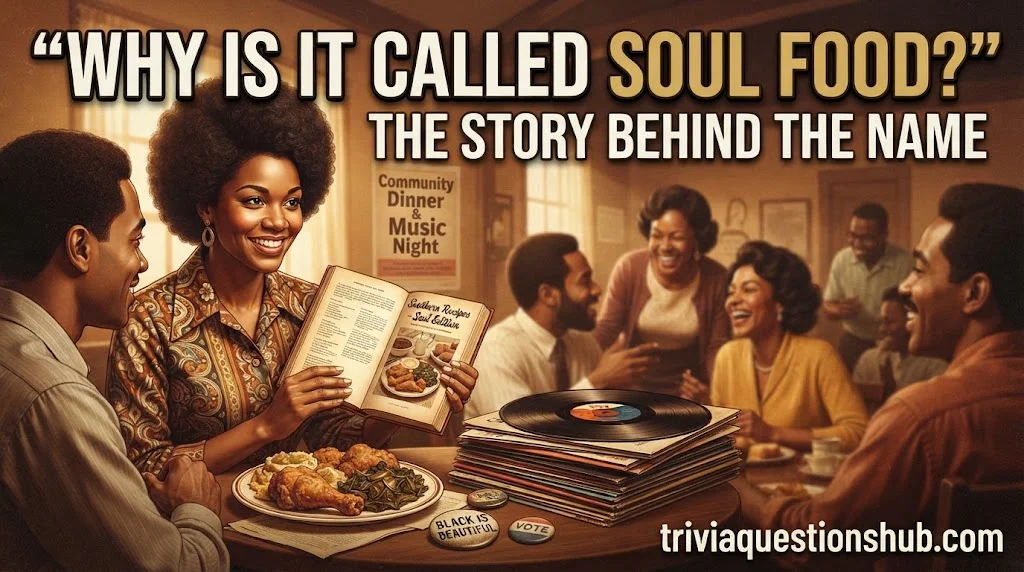
Origin of the Term “Soul Food” Trivia
The phrase “soul food” is newer than the cuisine itself, tied closely to a specific era of Black cultural identity.
When did the term “soul food” first become widely used? During the 1960s, alongside the civil rights and Black Nationalism movements.
What other “soul” term paved the way for “soul food”?Soul music, which was already popular before the food term caught on.
What book contains one of the earliest written uses of “soul food”?The Autobiography of Malcolm X, published in 1965.
Who co-wrote The Autobiography of Malcolm X with Malcolm X? Journalist Alex Haley.
Who wrote an influential 1960s essay simply titled “Soul Food”? Writer LeRoi Jones, later known as Amiri Baraka.
What movement is “soul food” closely associated with? The Black Nationalism and civil rights movements of the 1960s.
What did the word “soul” represent in Black culture at the time? Cultural pride, identity, and connection to shared heritage.
Before the 1960s, what was this cuisine generally just called? Southern cooking or home cooking, without a distinct separate name.
What quote distinguishes soul food from Southern food broadly? Cook and food writer Bob Jeffries noted that soul food is Southern, but not all Southern food is soul food.
What decade saw soul food restaurants begin to flourish? The 1960s and 1970s.
What helped soul food enter the American mainstream? Cookbooks, media coverage, and the rise of Black-owned restaurants.
What 1970 cookbook blended memoir and soul food history?Vibration Cooking by Vertamae Smart-Grosvenor.
Why is National Soul Food Month observed? To celebrate and draw attention to the culture and history surrounding soul food.
Which organization created National Soul Food Month? The Culinary Historians of Chicago.
In what month is National Soul Food Month recognized? June.
What made the term “soul food” more than just a food label? It became a marker of cultural pride and identity for Black Americans.
What broader identity shift happened alongside the naming of soul food? Growing recognition of Black culture, food, and history as worthy of celebration and study.
How did soul food differ in meaning from ordinary comfort food? It carried specific historical weight tied to slavery, survival, and Black heritage.
What kind of food writing emerged after the term became popular? Cookbooks and articles that treated soul food as a cultural subject, not just recipes.
What generational shift helped preserve the soul food name? Younger generations embraced the term as part of reclaiming cultural history.
Why do some food historians still debate the term’s exact origin? No single person is credited; it grew organically within Black communities before appearing in print.
What kind of gatherings helped spread the term “soul food”? Restaurants, churches, and community events across newly settled Northern cities.
How does “soul food” connect to the phrase “soul brother” or “soul sister”? All used “soul” as shorthand for shared Black cultural identity in the 1960s.
What effect did the Black Power movement have on food identity? It encouraged pride in traditionally Black dishes that had once been overlooked or dismissed.
Did the ingredients of soul food change when it got its name? No, the dishes stayed largely the same; what changed was the cultural recognition and pride attached to them.
What kind of businesses grew alongside the soul food name in cities? Black-owned restaurants, caterers, and food writers built around the newly named cuisine.
What does the “soul” in soul food ultimately represent? Heart, heritage, and the resilience passed down through generations of cooking.
How is soul food discussed differently today compared to the 1960s? It’s now studied academically and celebrated in mainstream media, not just within Black communities.
What written works helped cement soul food as a cultural topic? Essays and cookbooks from writers like Amiri Baraka and Vertamae Smart-Grosvenor.
What modern purpose does the “soul food” label still serve? It honors the historical journey behind the dishes, not just their taste.
Classic Soul Food Dishes Trivia
These are the dishes most people picture when they think of soul food, each with its own story behind it.
What dish is most associated with the nickname “Gospel Bird”? Fried chicken, because it was often prepared for Sunday after-church meals.
Why is fried chicken linked to Sundays specifically? Cooks, including field workers, had more free time on weekends and holidays to butcher and fry chicken.
What leafy vegetable is a soul food cooking staple? Collard greens, usually simmered with smoked meat for hours.
What meat is traditionally used to season collard greens? A smoked ham hock or turkey leg.
What two other greens are common alongside collards? Mustard greens and turnip greens.
What legend surrounds black-eyed peas on New Year’s Day? Eating them is said to bring good luck and prosperity for the coming year.
What is the black-eyed peas and rice dish called? Hoppin’ John.
What sweet potato dish is a holiday soul food staple? Candied yams, sweet potatoes cooked in butter, sugar, and warm spices.
What bread is considered the foundation of a soul food table? Cornbread.
What are hush puppies? Small, deep-fried balls of cornmeal batter, usually served with seafood or barbecue.
What are jonnycakes? Cornmeal griddle cakes or flatbreads, often served with butter or syrup.
What baked good rounds out a soul food spread besides cornbread? Biscuits, a buttery, flaky bread similar to a British scone but less sweet.
What baked pasta dish became a soul food comfort classic? Macaroni and cheese.
What fried fish is closely tied to soul food menus? Catfish, often cornmeal-crusted and pan-fried or deep-fried.
What controversial dish comes from cleaned and boiled pig intestines? Chitterlings, also called chitlins.
What pork dish involves meat pounded thin and smothered in gravy? Chicken-fried steak, a soul food staple made with beef, milk or egg, and flour.
What cut of pork is commonly braised or pickled in soul food cooking? Pig’s feet.
What dish features pork chops cooked slowly in gravy? Smothered pork chops.
What beef cut became a soul food favorite through slow braising? Oxtails.
What stew connects soul food to Louisiana and West Africa? Gumbo, a rich stew of meat or seafood, vegetables, and rice.
What drink color is traditionally associated with soul food meals? Red, whether from strawberry, cherry, or fruit punch drinks.
When did red drinks first become popular in Black communities? During circuses and Emancipation celebrations in the 1870s and 1880s.
What dessert made with peaches is a soul food classic? Peach cobbler.
What pie is a beloved soul food holiday dessert? Sweet potato pie.
What creamy Southern dessert uses layered wafers and custard? Banana pudding.
What crispy pork snack comes from fried pork skin? Cracklins.
What corn-based breakfast dish is a Southern soul food staple? Grits.
How is okra most commonly prepared in Southern soul food cooking? Fried, though it’s also stewed or used to thicken gumbo.
What grain is central to many soul food side dishes? Rice, usually cooked plain or in broth to soak up sauces and gravies.
What smoky, slow-cooked meat is central to Southern soul food barbecue? Pork, especially ribs cooked low and slow.
Soul Food Legends and Restaurants Trivia
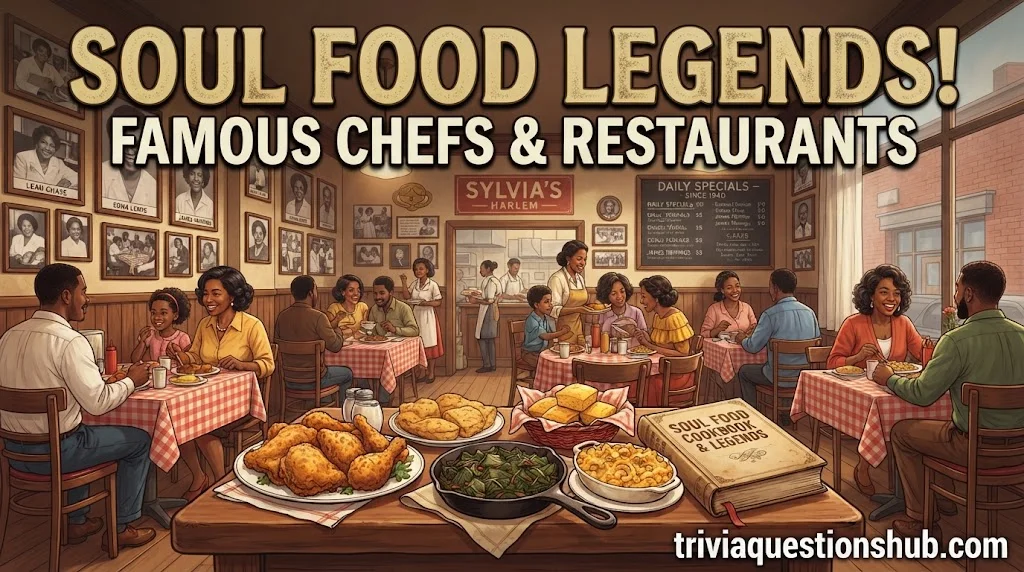
These cooks, writers, and restaurateurs turned home recipes into a recognized and celebrated American cuisine.
Who is known as “The Queen of Soul Food”? Sylvia Woods, founder of Sylvia’s Restaurant in Harlem.
In what year did Sylvia’s Restaurant open? 1962.
In what New York neighborhood is Sylvia’s Restaurant located? Harlem.
Who ran the legendary New Orleans restaurant Dooky Chase’s? Chef Leah Chase.
What made Leah Chase a defining figure in Black culinary history? She became one of the most influential Black chefs of the 1960s through Dooky Chase’s Restaurant.
Who is considered the most influential Black chef of her era for elevating Southern cooking? Edna Lewis.
What landmark cookbook did Edna Lewis publish in 1976?The Taste of Country Cooking.
What did Edna Lewis’s cooking style do for Southern food’s reputation? It transformed Southern cooking into a respected form of fine dining.
Who wrote the 1970 book Vibration Cooking? Vertamae Smart-Grosvenor.
What made Vibration Cooking different from a typical cookbook? It blended recipes with memoir, Black history, and storytelling.
Who was known as “Princess Pamela” in the New York food scene? Pamela Strobel, a Harlem restaurateur and cookbook author.
When was Princess Pamela active in New York’s soul food movement? The late 1960s and early 1970s.
Which food writer described the concept of “culinary memory” in African American cooking? Jessica B. Harris.
What role did Jessica B. Harris play in soul food scholarship? She’s a cultural historian known for documenting African influences on American food.
What cook and writer said soul food is Southern, but not all Southern food is soul? Bob Jeffries.
What made these cooks more than just chefs? They acted as cultural ambassadors, helping establish soul food as a respected American cuisine.
What kind of businesses did many of these figures open? Restaurants and catering businesses that brought soul food to wider audiences.
What written works helped preserve these chefs’ legacies? Published cookbooks, memoirs, and essays documenting their recipes and philosophy.
How did these restaurants function beyond serving food? As community gathering spaces during the Civil Rights era and beyond.
What is Sylvia’s Restaurant still known for today? Being one of the most famous soul food destinations in America.
What common thread connects Sylvia Woods, Leah Chase, and Edna Lewis? Each helped shift soul food from home cooking into a nationally recognized cuisine.
How did soul food restaurants change during the mid-20th century? They grew from small family kitchens into established, celebrated dining destinations.
What impact did cookbooks by these authors have on soul food’s reputation? They documented recipes and history, giving soul food lasting cultural legitimacy.
How is soul food’s legacy carried forward today? Through chefs, home cooks, and communities who continue preserving original recipes and stories.
What modern direction has soul food cooking taken? Chefs are reimagining classics with fresher produce, leaner proteins, and global influences.
What health-conscious substitution has become common in soul food cooking? Swapping smoked turkey for pork in dishes like collard greens.
What global culinary influence has shaped healthier soul food today? Plant-based cooking philosophy inspired by Jamaican Rastafari cuisine.
Why do many communities work to preserve original soul food recipes? To protect cultural heritage while adapting to modern health concerns.
Where is soul food served today besides restaurants? Family kitchens, neighborhood diners, and high-end restaurants alike.
What overall legacy do these soul food pioneers share? They turned survival cooking into a proud, permanent part of American culinary history.
FAQs
What is the origin of soul food?
Soul food began with enslaved West and Central Africans in the American South, who adapted African ingredients and cooking techniques to survive on meager rations during slavery.
What are some interesting facts about soul food?
The term didn’t exist before the 1960s, the traditional West African diet was mostly plant-based, and “red” drinks became a soul food tradition dating back to the 1870s.
Who made soul food first?
No single person invented soul food. Enslaved African cooks across Georgia, Mississippi, and Alabama collectively created it by adapting African recipes to Southern plantation conditions.
Why do they call it soul food?
The name emerged in the 1960s alongside the civil rights and Black Nationalism movements, borrowing from “soul music” to describe food tied to Black cultural identity and pride.
Conclusion
Soul food is far more than fried chicken and cornbread. It’s a living record of African heritage, survival, and community, carried from West African fields to modern American tables. However many of these 154 questions you got right, one thing’s certain: soul food’s history runs as deep as its flavor.
Abroy Sohail is the founder and lead content writer at TriviaQuestionsHub.com. Passionate about trivia, general knowledge, and helping readers learn something new every day, Abroy curates and writes engaging quiz content for readers of all ages.